

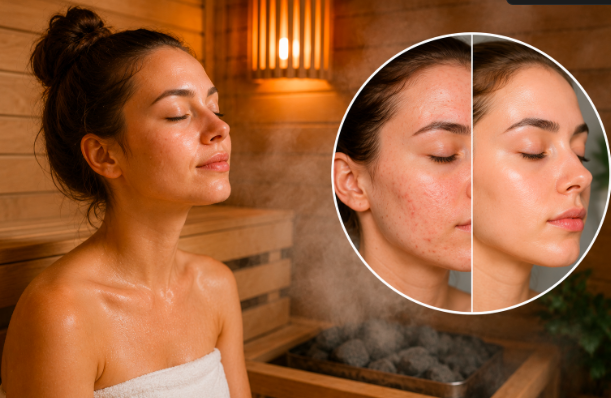
Acne is one of the most common skin concerns people search for solutions to, and saunas have become a popular wellness trend that many believe can help clear breakouts. But is sauna good for acne, or could it actually make things worse?
The truth lies somewhere in between, and understanding how heat, sweat, and steam interact with your skin can help you decide whether sauna sessions belong in your skincare routine.
What Happens to Your Skin in a Sauna
When you sit in a sauna, your body temperature rises, and your skin responds in several physical ways. These reactions directly influence whether sauna sessions help or harm acne-prone skin.
Heat and Sweat
As the surrounding temperature increases, your sweat glands activate to cool the body down, releasing moisture through the pores.
This sweating process flushes out some surface debris, but it also means your skin is exposed to prolonged warmth and humidity, which can affect oil production and bacterial activity if not managed properly afterward.
Pore Opening
Heat causes blood vessels near the skin’s surface to dilate and pores to relax and widen slightly.
This is often marketed as a way to “open” pores for deeper cleansing, though in reality pores don’t truly open and close like doors; they simply become more pliable, allowing trapped oil and dirt easier passage out when combined with proper cleansing afterward.
Is Sauna Good for Acne – Benefits
There are genuine advantages to sauna use that can indirectly support clearer skin, particularly when sessions are followed by good hygiene practices. These benefits mostly relate to circulation, detox-like effects, and stress relief.
Improved Circulation
Heat exposure increases blood flow to the skin, delivering more oxygen and nutrients to skin cells while helping carry away waste products. Better circulation can support faster healing of existing acne lesions and contribute to a healthier overall skin tone over time.
Detoxification
While sweating doesn’t remove toxins the way some marketing claims suggest, it does help push oil, dead skin cells, and surface grime out of the pores
. Rinsing immediately after a sauna session prevents this expelled debris from resettling into the skin, which can reduce clogged pores when done consistently.
Stress Reduction
Stress is a well-documented trigger for acne flare-ups because it raises cortisol levels, which in turn increases oil production. Saunas promote relaxation and lower stress hormones, making this one of the more reliable indirect ways sauna use can support clearer skin over time.
Can Sauna Make Acne Worse
Despite the benefits, sauna sessions carry real risks for acne-prone individuals if used incorrectly. Excess heat, moisture, and bacteria exposure can sometimes trigger new breakouts rather than prevent them.
Excess Sweating
Sweat itself isn’t the enemy, but when it sits on the skin too long, it mixes with oil and dead skin cells, creating a perfect environment for clogged pores. People with sensitive or already inflamed acne should avoid letting sweat dry on the face without rinsing.
Bacteria and Moisture
Shared sauna benches, towels, and humid air can harbor bacteria that transfer onto warm, open pores. Combined with sweat, this bacterial exposure can worsen inflammatory acne, especially for those prone to bacterial breakouts like folliculitis or cystic acne.
Skin Irritation
Excessive heat exposure can sometimes aggravate sensitive or already inflamed skin, leading to redness, increased oil production, or a temporary worsening of active breakouts.
Those with rosacea-prone or highly reactive skin should be especially cautious with frequent or prolonged sauna use.
Types of Sauna and Acne
Not all saunas affect the skin the same way. The intensity of heat and moisture levels vary significantly between sauna types, which changes how your skin responds.
Traditional Sauna
Traditional dry saunas use high heat with low humidity, typically ranging between 70 and 90 degrees Celsius. This intense, dry heat encourages heavy sweating quickly, which can be effective for circulation benefits but may dehydrate the skin if sessions run too long.
Infrared Sauna
Infrared saunas operate at lower temperatures but penetrate deeper into the skin and tissue, producing a more gentle yet effective sweat response. Many dermatologists consider infrared sauna gentler on acne-prone skin since it causes less surface irritation while still promoting circulation and relaxation.
Steam Room
Steam rooms combine heat with high humidity, creating a moist environment that some believe helps loosen blackheads and clogged pores. However, the constant moisture can also be more hospitable to bacteria, making post-session cleansing even more essential compared to dry saunas.
How to Use Sauna Safely for Acne-Prone Skin
Following the right pre- and post-sauna habits makes a significant difference in whether your skin benefits or suffers. The table below outlines a simple, practical routine.
| Step | What to Do | Why It Matters |
| Before Sauna | Cleanse face with a gentle cleanser | Removes makeup and surface oil before heat exposure |
| During Sauna | Avoid touching or rubbing your face | Reduces bacteria transfer to warm, open pores |
| Session Length | Limit to 15-20 minutes | Prevents excessive dehydration and irritation |
| Immediately After | Rinse face with lukewarm water | Washes away sweat and loosened debris |
| Post-Sauna Care | Apply a light, non-comedogenic moisturizer | Restores hydration without clogging pores |
| Frequency | 2-3 times per week | Allows skin to benefit without overexposure |
Sauna Habits That Help vs Harm Acne-Prone Skin
| Helpful Habits | Harmful Habits |
| Showering right after sweating | Letting sweat dry on skin |
| Using a clean towel each visit | Sharing towels or sitting directly on benches without a barrier |
| Keeping sessions short and consistent | Staying in the sauna for excessively long periods |
| Staying hydrated before and after | Going into sauna dehydrated, which stresses skin |
| Using infrared or moderate-heat sauna for sensitive skin | Using an extremely high-heat sauna with already inflamed acne |
FAQs
Does sauna help cystic acne?
Sauna can support circulation and stress reduction, but it won’t directly treat cystic acne, which usually requires dermatological treatment alongside any lifestyle habits.
How often should I use a sauna for acne?
Two to three sessions per week, each lasting fifteen to twenty minutes, is generally considered a safe and effective frequency for most skin types.
Is an infrared sauna better than a traditional sauna for acne?
Infrared sauna is often gentler on sensitive or acne-prone skin since it uses lower temperatures while still promoting sweating and circulation benefits.
Should I wash my face immediately after sauna?
Yes, rinsing your face right after a sauna session is essential to prevent sweat and loosened debris from resettling into your pores.
Conclusion
So, is sauna good for acne? The honest answer is that it can be beneficial when used correctly, thanks to improved circulation, stress reduction, and the gentle loosening of clogged pores, but it can also worsen breakouts if sweat is left on the skin too long or sessions are too frequent and intense.
The key lies in proper hygiene before and after each session, choosing a sauna type suited to your skin sensitivity, and keeping sessions moderate in both length and frequency.
Related Articles
Wealth Advisory Services for Financial Planning Goals
The Evolution of Workplace Technology: Beyond Communication Tools
Acupuncture as Part of Integrative Care: Enhancing Holistic Wellness