


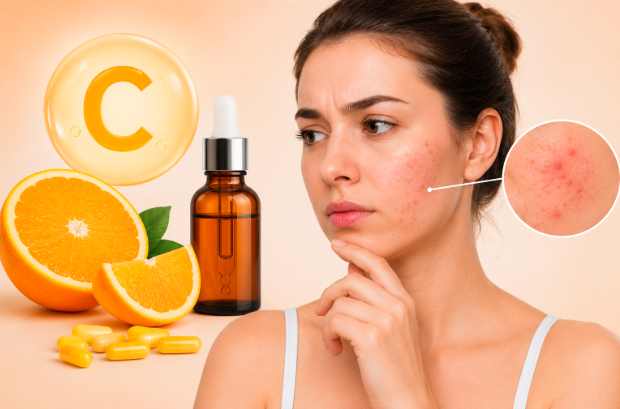
Vitamin C is one of the most popular skincare ingredients today, praised for brightening skin and fighting signs of aging, yet many people still wonder if vitamin C causes acne when they notice breakouts after starting a new serum.
The answer isn’t a simple yes or no, since vitamin C itself doesn’t clog pores, but certain factors related to formulation, skin type, and usage can trigger acne-like reactions. Understanding these factors helps you use vitamin C safely without unwanted side effects.
What Is Vitamin C and How It Works on Skin
Vitamin C, commonly known as ascorbic acid in skincare products, is a powerful antioxidant that protects skin from free radical damage and supports collagen production.
It works by neutralizing oxidative stress caused by sun exposure and pollution, while also helping to fade dark spots and even out skin tone over time.
Antioxidant Properties
As a potent antioxidant, vitamin C helps defend skin cells against environmental damage from UV rays and pollutants that accelerate aging and inflammation. This protective function generally supports healthier skin rather than causing breakouts, making vitamin C beneficial for most skin types when formulated correctly.
Brightening Effects
Vitamin C is widely used to reduce hyperpigmentation and dark spots by inhibiting melanin production in the skin. This brightening action makes it a popular choice for those dealing with post-acne marks, since it can fade discoloration left behind after breakouts heal.
Does Vitamin C Cause Acne Directly
Pure vitamin C in its stable, well-formulated form is not comedogenic, meaning it does not clog pores or directly cause acne on its own. However, breakouts can still occur due to other factors tied to the product or how the skin reacts to it.
Comedogenic Ratings
Ascorbic acid itself has a very low comedogenic rating, meaning it is unlikely to block pores when used alone. The real concern often lies in additional ingredients added to vitamin C formulations, such as heavy oils or silicones, which may be more pore-clogging than the vitamin C itself.
Skin Purging vs Breakouts
Many people confuse purging with an actual breakout caused by vitamin C, but these are different processes with different causes. Purging happens when active ingredients speed up cell turnover, pushing existing congestion to the surface faster, while a true breakout results from irritation or pore-clogging ingredients unrelated to this turnover process.
Reasons Vitamin C Might Trigger Breakouts
While vitamin C alone rarely causes acne, several related factors can lead to breakouts after introducing it into a skincare routine. These reasons usually involve formulation issues, skin sensitivity, or improper application.
Unstable Formulations
Vitamin C oxidizes easily when exposed to air, light, or heat, turning the product yellow or brown and potentially irritating the skin. Using an oxidized or poorly preserved vitamin C serum can trigger redness, sensitivity, and breakouts that have nothing to do with the vitamin itself but rather its degraded state.
High Concentration Irritation
Many vitamin C products contain high percentages of ascorbic acid, sometimes between fifteen and twenty percent, which can overwhelm sensitive skin. This irritation can disrupt the skin barrier, leading to inflammation that sometimes manifests as small bumps or breakouts.
Combining with Wrong Ingredients
Layering vitamin C with certain actives like retinol or strong exfoliants without proper spacing can intensify irritation and barrier damage. A compromised barrier becomes more prone to inflammation and breakouts, even though the vitamin C is not the direct cause.
Low Quality Products
Some vitamin C products include comedogenic oils, fragrances, or alcohol-based fillers to stabilize the formula or improve texture. These additional ingredients, rather than the vitamin C itself, are often the actual culprits behind clogged pores and resulting breakouts.
Vitamin C Formulation Types and Their Acne Risk
Different forms of vitamin C used in skincare carry varying levels of stability and irritation potential, which directly impacts their likelihood of causing breakouts.
| Vitamin C Type | Stability | Acne Risk | Best For |
| L-Ascorbic Acid | Less stable, oxidizes fast | Higher if oxidized or at high concentration | Normal to oily skin, experienced users |
| Sodium Ascorbyl Phosphate | More stable | Low | Sensitive and acne-prone skin |
| Magnesium Ascorbyl Phosphate | Stable | Low | Sensitive skin needing gentle brightening |
| Tetrahexyldecyl Ascorbate | Very stable, oil-soluble | Moderate, depends on base oils | Dry to normal skin |
| Ascorbyl Glucoside | Stable | Low | All skin types, including acne-prone |
How to Use Vitamin C Without Triggering Acne
Following the right application practices can significantly reduce the chances of breakouts while still gaining the brightening and antioxidant benefits of vitamin C.
| Step | Recommendation | Reason |
| Patch Test | Apply on a small area for three days first | Identifies reactions before full-face use |
| Start Low | Begin with five to ten percent concentration | Reduces irritation risk for sensitive skin |
| Check Formula | Choose oil-free, non-comedogenic serums | Lowers the chance of clogged pores |
| Store Properly | Keep in a cool, dark place, sealed tightly | Prevents oxidation and irritation |
| Introduce Slowly | Use every other day initially | Allows skin to adjust gradually |
| Avoid Mixing | Don’t combine with retinol or strong acids in the same routine | Prevents barrier damage and breakouts |
Vitamin C Habits That Help vs Harm Acne-Prone Skin
| Helpful Habits | Harmful Habits |
| Choosing stable, non-comedogenic formulas | Using oxidized, discolored serums |
| Patch testing new products | Applying high concentrations right away |
| Storing serum away from sunlight | Leaving bottle open or in heat |
| Introducing gradually into routine | Layering with multiple actives at once |
| Following with proper moisturizer and SPF | Skipping barrier support after application |
FAQs
Can vitamin C serum cause pimples?
Vitamin C serum itself rarely causes pimples, but poor formulation, oxidation, or added comedogenic ingredients in the product can trigger breakouts.
Is purging from vitamin C normal?
Mild purging can occur as skin cell turnover increases, but it should improve within a few weeks rather than continuously worsening.
Which vitamin C is best for acne-prone skin?
Sodium ascorbyl phosphate and ascorbyl glucoside are generally considered the safest, most stable options for sensitive or acne-prone skin.
Should I stop using vitamin C if I break out?
If breakouts persist beyond two to three weeks or worsen significantly, it’s best to discontinue use and consult a dermatologist to identify the exact cause.
Conclusion
So, does vitamin C cause acne? In most cases, pure and properly formulated vitamin C does not directly cause breakouts, since it has a low comedogenic rating and offers genuine skin benefits like antioxidant protection and brightening. The real triggers behind breakouts are usually unstable formulations, high concentrations, added comedogenic ingredients, or improper layering with other actives.
By choosing a stable formulation suited to your skin type and introducing it gradually with proper storage and application habits, you can enjoy the benefits of vitamin C without worrying about unwanted acne.
Related ARTICLES
The Connection Between High Cholesterol and Heart Disease
Types of Services Offered by Foot and Ankle Specialists