

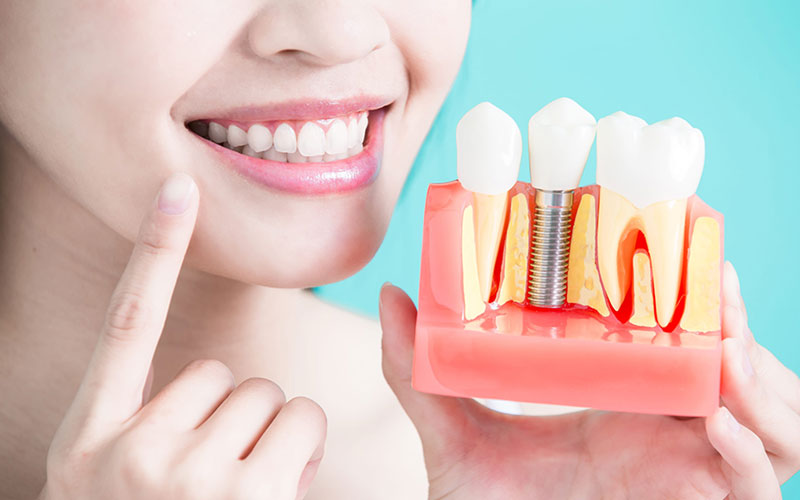
Dental implants provide a solution for individuals with one or more missing teeth; they are designed to replicate the form and function of a natural tooth root. These implants typically consist of a titanium post inserted into the jawbone, an abutment connecting to the replacement tooth, and a custom-made crown. This design creates a stable, long-lasting configuration in the mouth. Here are several benefits of dental implants:
Providing Support and Stability
Implants offer reliable support for replacement teeth, and they function much like natural tooth roots by transferring chewing and speaking pressures to the surrounding jawbone. The titanium post and implant crown form a stable anchor securely fixed in the bone. This minimizes the risk of movement or shifting, an issue sometimes seen with removable prosthetics.
Compared to bridges or traditional dentures, dental implants remain stationary. They do not rely on adhesives or frameworks that affect adjacent healthy teeth. This fixed placement allows a natural-feeling bite, and it enables a wider diet selection without concern that the prosthesis will dislodge during meals.
Preserving Structure
Dental implant placement helps protect neighboring teeth; it avoids the need to alter healthy enamel for support. Some traditional dental bridges require reshaping adjacent teeth to act as anchors, which can compromise otherwise sound tooth structure. Implants are anchored directly into the jawbone without affecting nearby natural teeth. For individuals seeking a conservative option to replace a single tooth, implants are often an ideal choice.
Offering Durability and Longevity
Implants are recognized for their robust construction and capacity to function as a long-term tooth replacement solution. The materials used, such as titanium for the implant post and high-strength ceramics for the crown, are selected for their compatibility with oral tissues and resistance to wear. Unlike some alternatives, implants do not rely on adhesives or support from other teeth. With consistent care and routine professional evaluations, dental implants can retain their integrity and function over an extended period. This durability makes them a good option for individuals seeking a stable, long-lasting approach to replacing missing teeth. When properly cared for, the implants can last a lifetime.
Enhancing Hygiene and Maintenance
The design of dental implants simplifies personal oral hygiene. Because each implant is an independent unit, individuals may follow familiar brushing and flossing routines without specialized devices or extra procedures. There is no need to work around bridge frameworks or removable partials.
Maintaining consistent daily hygiene is fundamental for long-term implant stability. It also supports the health of the soft tissues surrounding the restoration. A straightforward approach to cleaning an implant and its crown provides individuals with an easily manageable process for avoiding buildup and maintaining oral freshness.
Ask About Dental Implants
Dental implants provide structural, functional, and maintenance benefits for individuals seeking tooth replacement. They preserve natural tooth structure and support jawbone stability. A consultation with a qualified dental professional helps identify the most appropriate approach, and it confirms that all decisions align with oral health goals. Contact a qualified dentist today to discuss dental solutions such as implants, crowns, and veneers.