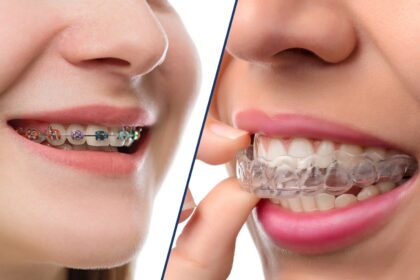



When facing orthodontic treatment decisions, patients often weigh two primary options: traditional metal braces and Invisalign clear aligners. Both treatments address misaligned teeth and bite irregularities, yet each approach offers distinct advantages and limitations. While both methods can achieve remarkable results in correcting dental alignment issues, your specific circumstances will ultimately guide the most suitable path forward.
What Are Traditional Braces?
Traditional braces represent the time-tested foundation of orthodontic treatment, utilizing a system of metal brackets, wires, and rubber bands to gradually move teeth into proper alignment. Orthodontists bond brackets directly to each tooth’s surface, then thread a wire through these brackets to apply controlled pressure that guides tooth movement over time. The treatment process involves regular adjustments where your orthodontist tightens or replaces wires to maintain steady progress toward your desired results.
Traditional braces excel at addressing complex orthodontic cases, including severe crowding, significant spacing issues, and complicated bite problems. The continuous pressure applied by the wire system allows for comprehensive control over tooth positioning. Patients wearing traditional braces must navigate certain lifestyle adjustments, including dietary modifications to avoid foods that could damage brackets or wires. Oral hygiene routines also require additional attention, as brackets and wires create spaces where plaque can accumulate.
What Is Invisalign?
Invisalign is an orthodontic treatment that introduced a nearly invisible alternative to traditional braces. This system uses a series of custom-made, clear plastic aligners that fit snugly over your teeth. They apply gentle pressure to guide them into proper alignment. Each set of aligners moves teeth incrementally, with patients typically switching to a new set every 2 to 3 weeks.
The treatment begins with detailed digital impressions or scans of your teeth, which orthodontists use to create a precise treatment plan. Invisalign aligners are removable, offering significant advantages in maintaining oral hygiene and dietary freedom. Patients can remove aligners for eating, drinking, brushing, and flossing, then replace them to continue treatment progress. This removability requires discipline, as aligners must be worn 20-22 hours daily to achieve optimal results.
The clear plastic material makes aligners virtually invisible during wear. This can address aesthetic concerns that often discourage adults from pursuing orthodontic treatment. This discretion has made Invisalign particularly popular among individuals who prefer treatment that doesn’t impact their appearance during social or business interactions.
How Do They Compare?
Treatment effectiveness varies between these approaches depending on case complexity. Traditional braces demonstrate superior performance in addressing severe alignment issues and complex bite problems. The fixed nature of braces provides continuous, controlled force application that can tackle challenging orthodontic situations.
Invisalign works exceptionally well for mild to moderate alignment issues, including spacing problems, minor crowding, and certain bite irregularities. Aesthetic appeal can favor Invisalign, as the clear aligners remain nearly invisible during wear. Traditional braces, while more noticeable, offer customization options through colored rubber bands that some patients may find appealing.
Maintenance requirements present another key difference. Traditional braces demand specialized oral hygiene techniques and dietary restrictions throughout treatment. Invisalign allows normal eating habits and standard oral hygiene routines, though aligners require cleaning and proper storage when removed.
Confer With an Orthodontist
Selecting between Invisalign and traditional braces requires a professional evaluation of your specific orthodontic needs. An orthodontist can assess your tooth alignment, bite relationship, and overall oral health to recommend the most appropriate treatment approach for your situation. Your orthodontist can explain how each option addresses your particular case and provide realistic timelines for achieving desired results.